Choosing a countertop is a major investment—whether you’re remodeling a kitchen, upgrading a bathroom vanity, or designing a luxury outdoor space. But what many homeowners don’t realize until after installation is this:
The secret to stone countertops that look brand-new for years isn’t luck—it’s maintenance.
As a stone wholesale supplier, we work with homeowners, designers, fabricators, and contractors every day. And one thing is always true: the most beautiful countertops are the ones that are cared for correctly.
This maintenance masterclass will walk you through practical, real-world cleaning and care tips for the most common stone surfaces, including:
- Granite
- Marble
- Quartzite
- Quartz (engineered stone)
- Soapstone
- Porcelain / sintered stone
You’ll learn how to clean each surface safely, what products to avoid, and how to protect your investment for long-term beauty.
The #1 Rule for All Stone Countertops: Use the Right Cleaner
Before we break down each material, here’s the most important universal rule:
✅ Use pH-neutral cleaners only
Avoid:
- vinegar
- bleach
- ammonia
- lemon juice
- “bathroom” cleaners
- abrasive powders
Even if a product says “natural,” it may still be acidic and can damage stone finishes over time.
Best everyday cleaner:
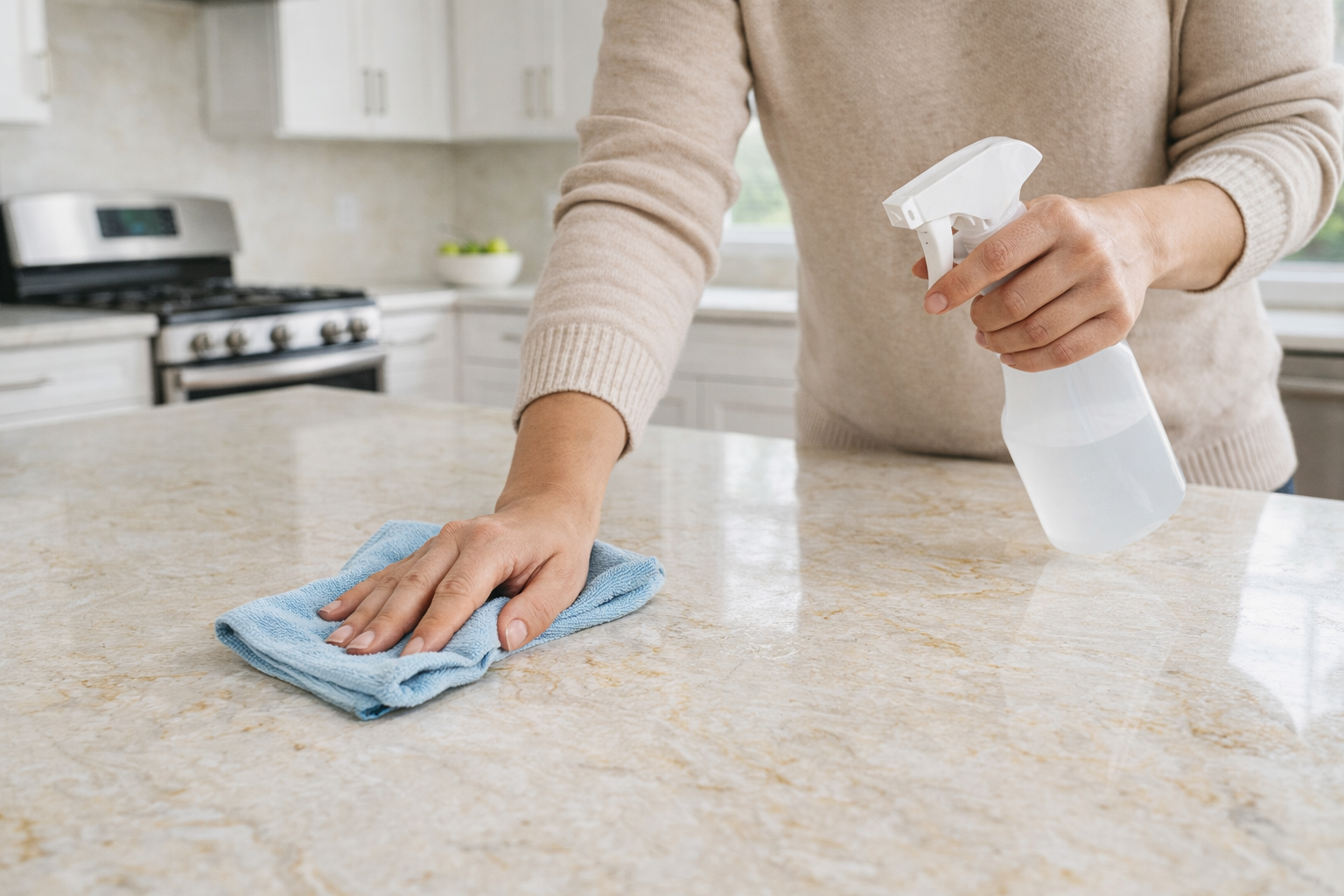
- warm water + a few drops of mild dish soap
- microfiber cloth
- pH-neutral stone cleaner (especially for marble/quartzite)
Daily Countertop Care (Works for Most Surfaces)
A simple routine prevents most long-term issues:
Daily / After Cooking
- wipe spills immediately
- use a microfiber cloth or soft sponge
- avoid letting oils sit (especially around stovetops)
Weekly
- use a stone-safe cleaner to remove buildup
- clean around faucet bases where water spots form
Always Use
- cutting boards (even if the stone is scratch resistant)
- trivets for hot pans (especially for quartz)
- coasters under wine, coffee, citrus drinks
Granite Countertops: Durable, Forgiving, and Easy to Maintain
Granite remains one of the most popular stones for kitchens because it’s naturally tough and heat resistant.
How to Clean Granite
- warm water + mild dish soap
- pH-neutral stone cleaner for deeper cleaning
- dry with microfiber to prevent streaking
What to Avoid
- acidic cleaners (they can dull the finish)
- harsh degreasers used daily
- abrasive pads
Sealing Granite
Granite is natural stone and can be porous. Many granites benefit from sealing.
How often to seal: usually once per year (varies by slab)
Quick Water Test
Drop water on the surface:
- if it beads up = seal is still good
- if it darkens the stone = time to reseal
Pro Tip: Leathered granite finishes are great for busy kitchens because they hide fingerprints and smudges better than polished surfaces.
Marble Countertops: Timeless Beauty (With a Little Extra Care)
Marble is iconic, but it’s softer than granite and more sensitive to acids.
How to Clean Marble
- pH-neutral stone cleaner (recommended)
- soft microfiber cloth
- wipe spills immediately
Biggest Marble Threat: Etching
Etching is not a stain—it’s a dull mark caused by acids such as:
- lemon juice
- vinegar
- tomato sauce
- wine
What to Avoid
- vinegar sprays
- citrus-based cleaners
- abrasive scrubbers
- leaving coffee/wine overnight
Sealing Marble
Marble should be sealed more frequently than granite.
How often to seal: every 6–12 months (depending on usage)
Pro Tip: If you want marble but worry about maintenance, consider using marble for:
- islands
- baking stations
- bathrooms
…and use quartz/granite on perimeter counters.
Quartzite Countertops: Natural Stone Strength + Marble-Like Movement
Quartzite is one of the best stones for kitchen remodels because it offers:
- dramatic natural veining
- excellent hardness
- strong heat resistance
But it’s still a natural stone—meaning it needs proper care.
How to Clean Quartzite
- mild soap + water daily
- pH-neutral stone cleaner weekly
- dry the surface to avoid water spots
What to Avoid
- acidic cleaners (can dull some finishes)
- leaving oils sitting too long (may darken unsealed areas)
Sealing Quartzite
Many quartzites need sealing, especially lighter colors.
How often to seal: typically once per year
Pro Tip: Quartzite gives you the luxury look of marble with better durability—making it a top choice for busy households.
Quartz Countertops (Engineered): Low Maintenance and Family-Friendly
Quartz is engineered using crushed quartz and resins. It’s one of the easiest countertop materials to maintain.
How to Clean Quartz
- mild dish soap + water
- non-abrasive sponge
- wipe spills quickly
What to Avoid
Even though quartz is durable, avoid:
- abrasive scrub pads
- harsh oven cleaners
- bleach-heavy products daily
Heat Warning
Quartz is not as heat-resistant as granite or quartzite due to resin content.
Always use:
- trivets
- hot pads
Pro Tip: Quartz is ideal for homeowners who want a luxury look with minimal upkeep—perfect for high-traffic family kitchens.
Soapstone Countertops: Naturally Stain Resistant and Full of Character
Soapstone is a unique natural stone that’s non-porous and doesn’t require sealing like granite or marble.
How to Clean Soapstone
- soap + water
- wipe dry
What to Expect
Soapstone develops a natural patina over time. Many homeowners love this “lived-in” look.
Optional Oiling
Some owners oil soapstone to darken and even out the appearance.
Pro Tip: Soapstone is one of the most forgiving stones for kitchens—especially for people who love a warm, natural, timeless look.
Porcelain / Sintered Stone: Ultra-Durable and Extremely Low Maintenance
Porcelain countertops are rising in popularity because they offer:
- high heat resistance
- stain resistance
- UV resistance (great outdoors)
How to Clean Porcelain
- mild dish soap + water
- general-purpose non-abrasive cleaner
- microfiber cloth
What to Avoid
- abrasive powders
- harsh scouring pads (can dull finishes)
Pro Tip: Porcelain is a strong choice for outdoor kitchens and modern remodels where durability is the top priority.
Stain Removal Tips (Quick Guide)
Oil Stains (granite/quartzite)
- baking soda + water paste
- leave 12–24 hours
- wipe clean and rinse
Coffee/Wine
- stone-safe poultice (best for natural stone)
- avoid DIY acids like lemon/vinegar
Water Spots
- dry after cleaning
- use microfiber cloth
- consider a stone-safe polish (for polished surfaces)
The Biggest Mistakes That Damage Countertops
Here are the most common issues we see:
❌ using vinegar “natural cleaners” on marble
❌ placing hot pans directly on quartz
❌ cutting directly on stone (dulls knives and can scratch finishes)
❌ not sealing natural stone regularly
❌ letting oils sit around stove areas
Final Thoughts: The Best Countertop Is the One You Maintain Correctly
Stone countertops are meant to last—but each surface has its own care requirements. When maintained properly:
- granite stays glossy and strong
- marble keeps its luxury charm
- quartzite stays bright and dramatic
- quartz remains clean and worry-free
A little routine maintenance goes a long way.
Need Help Choosing the Right Stone for Your Lifestyle?
At Stone Park USA, we supply premium slabs and help homeowners, designers, contractors, and fabricators select stone that matches both design goals and real-life use.
👉 Contact us today to:
- explore granite, marble, quartzite, and quartz slabs
- get wholesale pricing and availability
- schedule a slab viewing in our warehouse