Ask five people what the “best” countertop material is and you’ll get five different answers — because the honest answer isn’t about which stone is objectively superior, it’s about which one matches how you actually use your kitchen. A serious home cook who uses their cast iron daily has very different needs than a design-focused homeowner who wants a show stopping island. Here’s how granite, quartzite, marble, and quartz stack up, and which one is likely to fit your household best.
The Quick Comparison
| Granite | Quartzite | Marble | Quartz | |
| Mohs hardness | 6 – 6.5 | 7 | 3 – 5 | 7 |
| Sealing needed | Yes, every 1 – 2 years | Yes, every 1 – 2 years | Yes, 3 times per year | Never |
| Heat resistance | Excellent | Excellent | Good | Moderate – use trivets |
| Stain resistance | Good when sealed | Good when sealed | Poor – stains easily | Excellent |
| Scratch resistance | Excellent | Excellent | Poor | Very good |
| Type | Natural stone | Natural stone | Natural stone | Engineered |
Note that quartz is the one engineered material on this list — it’s roughly 90%+ ground natural quartz mineral combined with resins and pigments, which is exactly why it behaves so differently from the other three. That’s also why it’s worth reading alongside natural options rather than assuming “quartz” and “quartzite” are the same thing (a mix-up we see constantly, given how similar the names sound).
Granite: The Reliable All-Rounder
Granite has earned its reputation as the dependable choice for a reason. It’s hard enough (6–6.5 on the Mohs scale) to shrug off daily knife work and hot cookware straight from the stove, and it comes in an enormous range of colors and patterns — from tight, uniform speckling to bold, dramatic movement. It does need sealing every year or two, but it’s forgiving if you occasionally miss that window, and if a section ever does need to be replaced, it’s typically the most budget-friendly natural stone to redo.
Fits your lifestyle if: you cook often and use real heat and knives on your counter, you want natural stone character without marble’s fragility, and you’re comfortable with a light annual maintenance routine.
Quartzite: Marble’s Look, Granite’s (or Better) Toughness
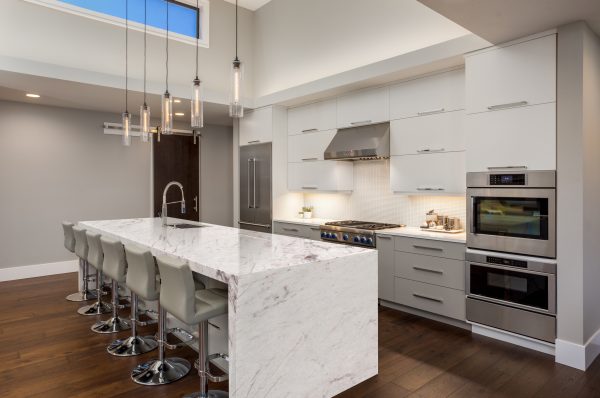
Quartzite is true natural stone — not to be confused with engineered quartz — formed when sandstone is subjected to intense heat and pressure, which is exactly why it ends up harder than granite in most cases. It delivers the soft, marble-like veining people love, especially in whites, creams, and warm earth tones, while holding up to scratches and heat significantly better than actual marble does. The tradeoff is price: quartzite typically sits at the top of the cost range on this list.
Fits your lifestyle if: you want the veined, high-end look of marble but cook too often (or too hard) to risk marble’s softness, or you’re finishing an outdoor kitchen or sun-exposed space where UV stability matters.
Marble: Unmatched Beauty, Real Commitment
Nothing looks quite like marble, and nothing on this list asks more of you in return. At just 3–5 on the Mohs scale, it’s meaningfully softer than the other three, prone to scratching from knives and etching from anything acidic — citrus, wine, vinegar — even with regular sealing. Sealing marble every six to twelve months slows staining but doesn’t prevent etching, so spills need prompt cleanup and acidic ingredients need real caution around the surface.
None of that makes marble a bad choice — it makes it the right choice for a specific kind of household. Pastry bakers specifically prize marble for how naturally cool it stays, which makes rolling dough easier. And plenty of homeowners are drawn to the patina marble develops over years of use, treating the softening and subtle etching as character rather than damage.
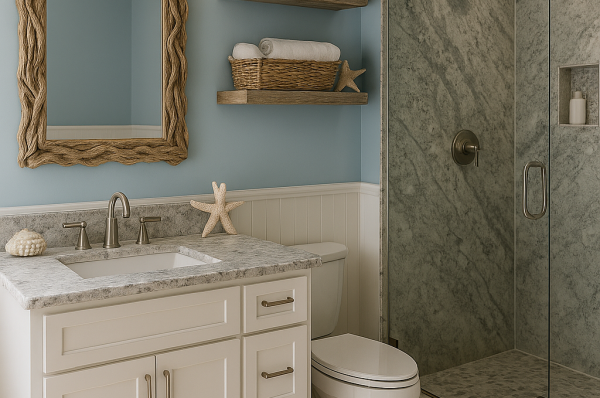
Fits your lifestyle if: beauty is genuinely your top priority, you’re finishing a lower-traffic area like a powder room, bar, or bathroom vanity rather than a daily-use kitchen, or you bake enough to want that cool, workable surface.
Quartz: Low-Maintenance, High-Consistency
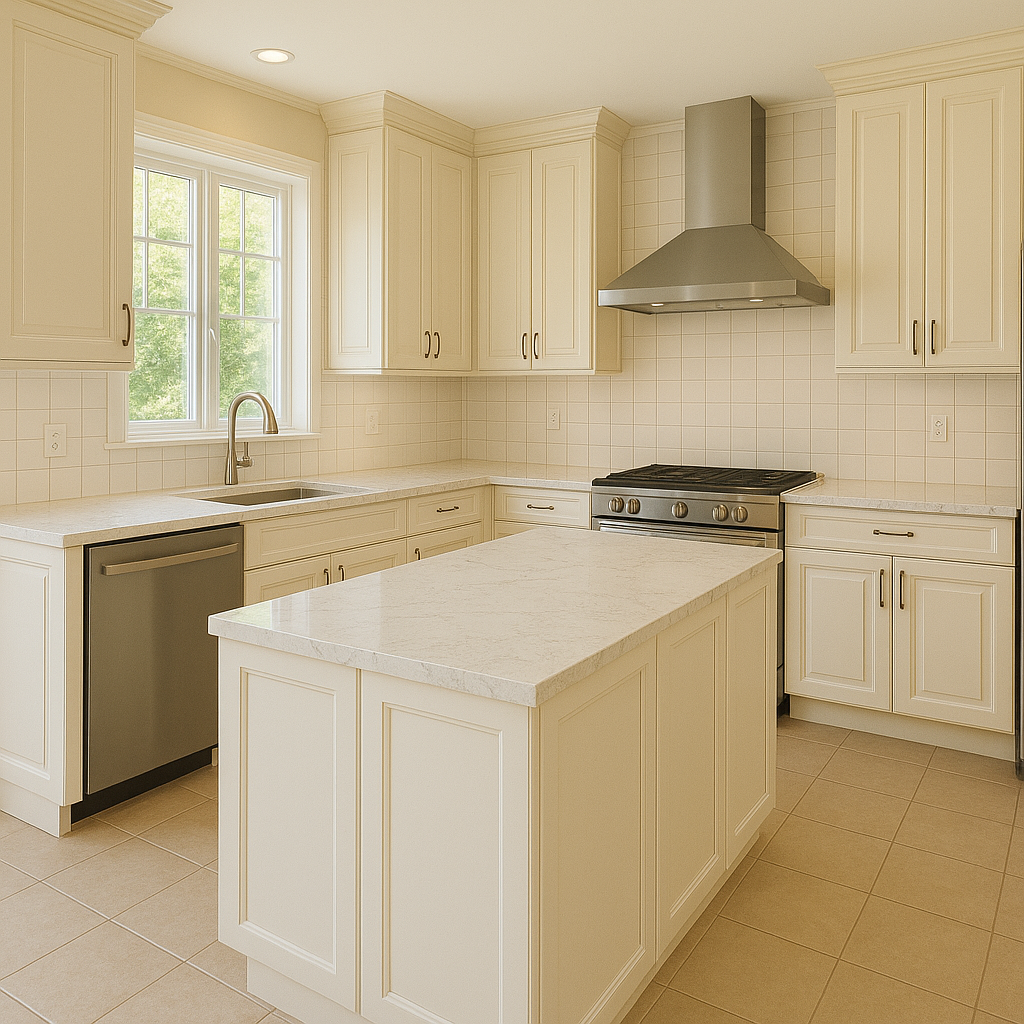
Engineered quartz is the closest thing to a worry-free countertop on this list. Because it’s non-porous, it never needs sealing and resists staining from wine, oil, and coffee without any extra effort — just soap, water, and normal cleaning. Its one real weakness is heat: unlike the natural stones here, quartz’s resin content means it can scorch or discolor above roughly 300°F, so trivets are non-negotiable, not optional.
Fits your lifestyle if: you have kids, host often, or simply don’t want maintenance on your to-do list, and you’re fine keeping a trivet within reach for hot pans.
Matching the Material to Your Life
Busy family with kids and daily cooking: Quartz or granite — both handle daily wear well, and neither demands the careful handling marble does.
Serious home cook who uses real heat and knives: Granite or quartzite — both take hot pans directly from the stove and resist knife marks far better than marble or (in quartz’s case) heat.
Design-first homeowner who wants a statement piece: Marble or quartzite — this is where dramatic veining and one-of-a-kind pattern matter more than low-maintenance convenience.
Low-traffic space — powder room, bar, bathroom vanity: Marble becomes much more practical here, since it isn’t absorbing daily spills and knife work the way a kitchen counter would.
Want the marble look without the babysitting: Quartzite is the natural-stone answer; quartz is the engineered one — both let you skip marble’s etching risk.
Seeing (and Feeling) the Difference in Person
Specs on a page only tell part of the story — the way light moves across a polished granite slab versus a honed quartzite one, or how a leathered finish changes a marble’s texture, is something you really have to see in person. (We cover how finish affects all of this in our polished vs. honed vs. leathered guide.)
With 300+ slabs in stock across granite, quartzite, marble, quartz, and soapstone, our showroom is built for exactly this kind of side-by-side comparison. [Visit our warehouse or talk to our team] to see how each material actually looks and feels before you decide what fits your kitchen — and your life.