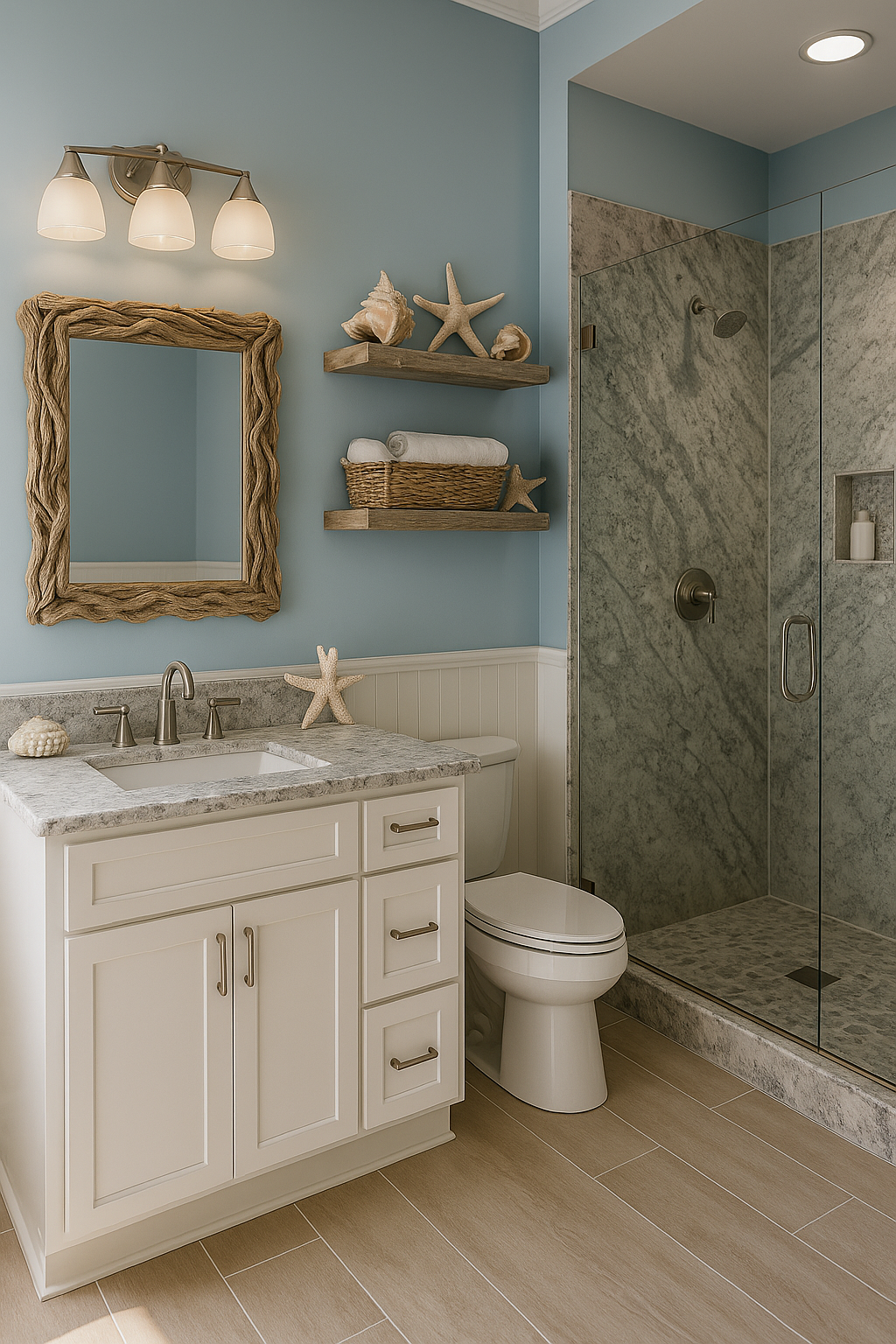
Kitchen countertop decisions get most of the attention, but bathroom vanities face their own, very different kind of wear. There’s no hot cookware or knife work, but there is near-constant exposure to water, humidity, soap film, and a rotating cast of cosmetics — perfume, nail polish remover, hairspray, makeup, hair dye — many of which are far harder on stone than anything that happens in a kitchen. The right material for a powder room isn’t always the right one for a busy double vanity, and getting that match right up front saves a lot of frustration later.
Why Vanities Wear Differently Than Kitchens
The biggest threats to a vanity top are chemical, not physical: acetone in nail polish remover, alcohol in perfume and hairspray, and pigment in hair dye can all etch or stain porous stone in seconds if left sitting. Combine that with the humidity of a bathroom — especially one with a shower nearby — and you get conditions that reward low-porosity, easy-to-seal (or seal-free) materials more than a kitchen typically does.
Granite: The Reliable Workhorse
Granite handles daily bathroom use well. It’s dense, scratch-resistant, and holds up to the humidity and splashing a busy vanity sees. It does need periodic sealing — generally once a year, similar to a kitchen countertop — but it’s forgiving enough that an occasional missed cosmetic spill won’t ruin the surface the way it might on marble.
Marble: Beautiful, But Best for Lighter Use
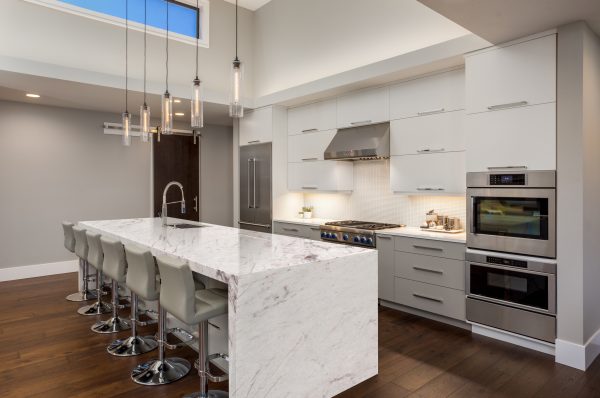
Marble is still one of the most requested looks for bathroom vanities, and for good reason — nothing else has quite the same soft, luminous veining. But it’s also the most demanding option on this list. Marble is soft and porous enough that perfume, makeup, hair dye, and especially nail polish remover can etch or stain it on contact, and manufacturers generally recommend resealing every three to six months in a bathroom — more often than you’d seal the same stone in a kitchen. Sealing also doesn’t make marble stain-proof; it just slows absorption, so spills still need to be blotted quickly rather than left to sit.
This is why marble tends to shine most in powder rooms and guest baths, where use is lighter and occasional, rather than primary or kids’ bathrooms where it’s in daily, heavy rotation.
Quartzite: Marble’s Look With More Backbone
For clients who want dramatic, marble-like veining without marble’s fragility, quartzite is usually the answer. It’s a genuinely harder, more durable natural stone, better able to shrug off the daily chemical exposure a vanity sees. It still requires sealing since it’s a natural stone, but it’s meaningfully more forgiving than marble day to day — making it a strong choice for a primary bath that still wants that high-end veined look.
Quartz: The Low-Maintenance Default
Engineered quartz is the safest recommendation for busy vanities and double-sink setups. Because it’s non-porous, it resists staining from cosmetics and moisture without ever needing to be sealed — just regular cleaning with a mild, pH-neutral soap. For primary bathrooms, kids’ bathrooms, or any vanity that’s going to see heavy daily use, quartz is usually the lowest-maintenance, most worry-free option on this list.
Soapstone: Understated and Naturally Water-Resistant
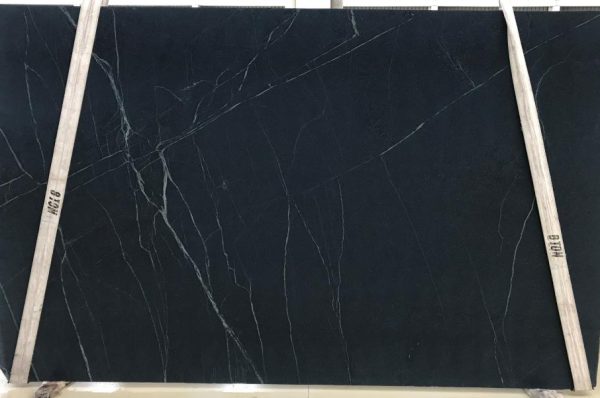
Soapstone is less commonly requested for vanities, but it’s worth considering for a more matte, understated look. It’s naturally non-porous, handles moisture well, and develops a soft patina over time rather than staining outright — a good fit for anyone drawn to a quieter, more organic aesthetic than polished granite or marble.
| Stone | Sealing Needed | Best For |
| Granite | Yes – about once a year | Primary baths, everyday use |
| Marble | Yes – every 3-6 months | Powder rooms, guest baths |
| Quartzite | Yes – about once a year | Primary baths wanting a marble look |
| Quartz | No | Double vanities, kids’ baths, heavy use |
| Soapstone | No (oilied, not sealed) | Understated, low-maintenance looks |
A Note on Finish
Matte finishes have become the dominant preference for vanities, and it’s not just an aesthetic trend — a honed finish also tends to hide the everyday water spots and light residue a vanity accumulates better than a high-gloss polished surface. We go deeper on how finish affects both look and maintenance in our polished vs. honed vs. leathered guide, which applies just as much to vanities as it does to kitchen islands.
Bringing It Together
There’s no single “best” stone for every bathroom — the right choice depends on how hard the space actually gets used. A guest powder room can carry a showstopping marble slab that a family’s primary bath simply can’t. A double vanity shared by kids getting ready for school is a very different situation than a spa-style master bath.
Because we stock 300+ slabs across granite, marble, quartzite, quartz, soapstone, porcelain, and Dekton, our team can help match the right material — and the right finish — to how your specific bathroom will actually be used, not just how it’ll look on day one. [Visit our warehouse or talk to our team] before you commit to a vanity slab.