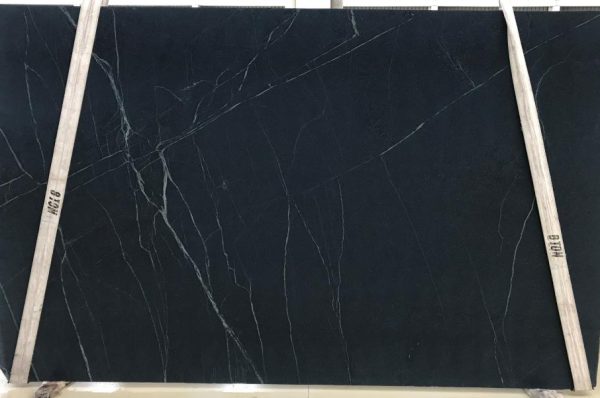
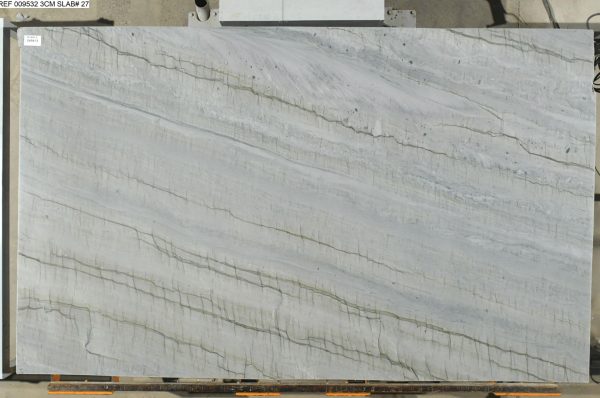
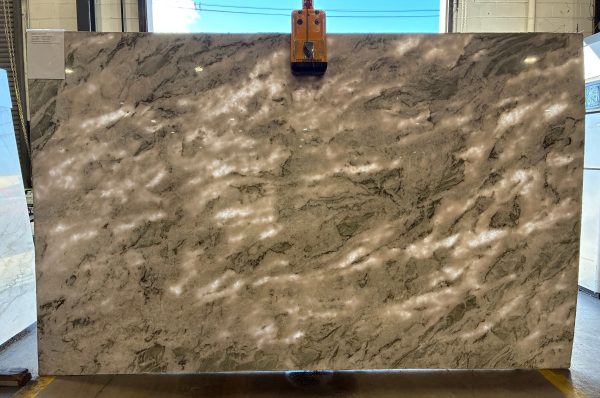
Most people shopping for a countertop start with color and stone type — granite or marble, white or veined, exotic or classic. But there’s a third decision that changes the entire character of a slab just as much as the stone itself: the finish.
The same block of granite or quartzite can look like a glossy showroom piece, a soft matte surface, or a rugged, hand-worked slab depending on how it’s finished. Finish also affects how forgiving the stone is day to day — how easily it shows fingerprints, how visible etching or scratches will be, and how it feels under your hand. Here’s how the three most common finishes — polished, honed, and leathered — compare, and how to think about which one fits your space.
What “Finish” Actually Means
Finish refers to the surface treatment applied to the stone after it’s cut from the block. The same slab of Calacatta marble or Black Pearl granite can be processed three different ways, and each method changes the surface texture, light reflection, and feel — without changing the underlying color or veining pattern.
Polished: The Classic High-Shine Look
Polishing buffs the stone to a smooth, reflective sheen using progressively finer abrasives until the surface is glass-like. It’s the finish most people picture when they think “granite countertop,” and for good reason — it saturates color and makes veining pop in a way no other finish can match.
Pros: Deepens color and contrast, easiest of the three to wipe clean, most resistant to staining because the tight, sealed surface leaves fewer pores exposed.
Cons: Shows fingerprints, water spots, and fine scratches more readily because the glossy surface reflects light off any imperfection. On marble and other calcite-based stones, etching from acidic foods (lemon, vinegar, wine) is more visible against the shine.
Best for: Kitchen islands and statement surfaces where you want maximum visual impact, granite and quartzite in busy kitchens (both resist etching well), and bathroom vanities, where spills are less frequent than in a kitchen.
Honed: Soft, Matte, Low-Maintenance
Honing stops the polishing process early, before the surface develops shine, leaving a smooth but matte, satin-like finish. It has a soft, contemporary look that’s become a favorite in transitional and modern kitchens.
Pros: Hides fingerprints, water spots, and light scratches far better than polished stone, since there’s no reflective surface to catch the eye. Comfortable, soft-touch feel underhand.
Cons: More porous than polished stone, so it typically needs sealing more often. It’s also the finish where etching shows up most clearly on marble and limestone — the dull, textured surface makes any dulled spot from acid contact stand out rather than blend in, which is the opposite of what many people expect from a “low-key” finish.
Best for: Bathroom vanities (lower spill risk, softer aesthetic), soapstone (honed is practically the default finish and highlights its natural chalky character), and kitchens where the homeowner prioritizes a matte look and is diligent about sealing and wiping up spills.
Leathered: Textured and Forgiving
Leathering uses diamond-tipped brushes to create subtle texture and movement across the surface after honing. The result has a slightly rippled, tactile feel — somewhere between matte and satin — that catches light unevenly rather than reflecting it directly.
Pros: Best of the three at concealing fingerprints, smudges, watermarks, and everyday wear, since the texture breaks up light and disguises minor surface marks. The added surface area and texture can also make the stone’s natural pattern look more dimensional.
Cons: The texture can trap grime in grout-like crevices if not cleaned regularly, and not every stone or color takes leathering well — it tends to look best on darker, more heavily patterned granites and quartzites, less so on delicate, finely veined marbles.
Best for: High-traffic kitchens (especially households with kids or heavy cooking), granite and quartzite islands, and anyone who wants a natural, quarried look rather than a manufactured one.
| Polished | Honed | Leathered | |
| Look | Glossy, reflective | Matte, soft | Textured, matte |
| Hides fingerprints/smudges | Worst | Good | Best |
| Etching visibility (marble) | Least visible | Highest | Moderate-high |
| Sealing frequency | Lowest | Highest | Moderate-high |
| Best stone matches | Granite, quartzite, marble | Soapstone, marble vanities | Granite, quartzite |
So Which One Should You Choose?
If you want maximum color impact and you’re working with a stain-resistant stone like granite or quartzite, polished is hard to beat. If you want a soft, quiet, contemporary look and you’re diligent about sealing and cleanup — especially in a bathroom — honed is a great fit. And if your kitchen sees real daily use and you’d rather the countertop hide life’s small messes than show every one of them, leathered is worth a serious look.
One thing worth knowing: not every stone takes every finish equally well, and finish availability can vary by slab. Because we stock 300+ slabs across granite, marble, quartzite, quartz, and soapstone, our team can walk you through which finishes are available on the specific stone and color you’re considering — and let you see and feel the difference in person before you commit. [Visit our warehouse or book a consultation] to compare finishes side by side.